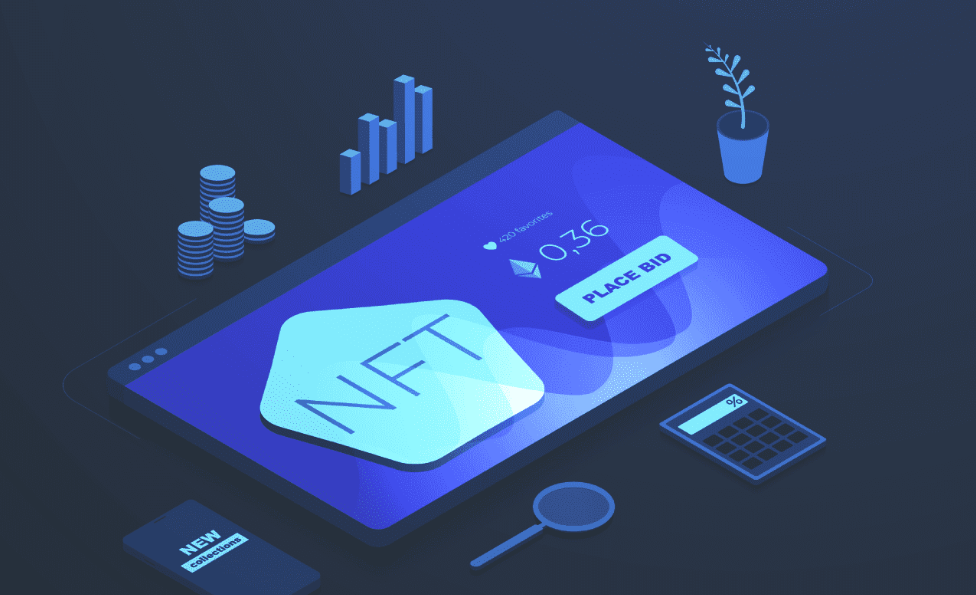
NFT marketplaces fuse on-chain token records with off-chain indexing to enable search, bidding, and provenance. They balance centralized and decentralized components for verification, transfer, and latency until finality. Programmable rights enforce creator royalties across transfers, while provenance standards formalize ownership sequences with cryptographic proofs. Cross-chain and privacy-preserving workflows extend trust signals, yet the practical tradeoffs between performance, autonomy, and discovery remain a focal point for stakeholders. The next step reveals how these elements cohere in real-world trade-offs.
Foundations: How NFT Marketplaces Work in Practice
NFT marketplaces operate as centralized or decentralized ecosystems that mediate the discovery, verification, and transfer of non-fungible tokens (NFTs) on a blockchain.
The architecture combines on-chain token records with off-chain indexing, enabling search, listing, and bidding.
Latency management optimizes transaction finality; royalty enforcement codifies creator fees across transfers, sustaining programmable rights within a trust-minimized, transparent marketplace framework.
See also: The Evolution of Digital Collectibles
Provenance and Standards: Building Trust in NFTs
Provenance and standards underpin the trust framework of NFT ecosystems by formalizing the sequence of ownership, asset metadata, and origin evidence across on-chain and off-chain data sources.
Provenance standards enable verifiable history, immutable attestations, and auditable lineage.
Rigorous governance yields clear trust signals, aligning collectors and platforms with transparent provenance frameworks, cryptographic proofs, and interoperable metadata schemas for resilient market integrity.
From Blockchain Assets to Seamless User Experience
The design centers on robust blockchain security, secure escrow, and verifiable metadata schemas that enable consistent display and search.
Interfaces must reflect provenance, immutability, and attribution while preserving performance, privacy, and user autonomy across diverse devices.
Scaling, Interoperability, and Privacy: What It Means for Buyers and Creators
Scaling, interoperability, and privacy reshape buyer and creator outcomes by enabling cross-chain asset portability, seamless marketplace integration, and privacy-preserving workflows.
The discussion examines scaling friction, where throughput and gas dynamics influence listing costs and settlement latency, and privacy implications, including on-chain visibility versus selective disclosure.
Interoperability compliance aligns standards, while trust signals emerge from verifiable provenance, cryptographic attestation, and auditable cross-chain attestation processes.
Conclusion
The NFT marketplace ecosystem coalesces onto-chain provenance with off-chain indexing to enable verifiable access, transfer semantics, and creator royalties. By anchoring ownership to immutable cryptographic proofs and standardized attestations, trust is engineered into user workflows—from secure escrow to provenance-aware discovery. As cross-chain interoperability expands, scalable schemas and privacy-preserving flows become the rails that support rapid, decentralized commerce. In short, provenance is the compass guiding a precision-driven, blockchain-native marketplace through a vast, interconnected frontier.
