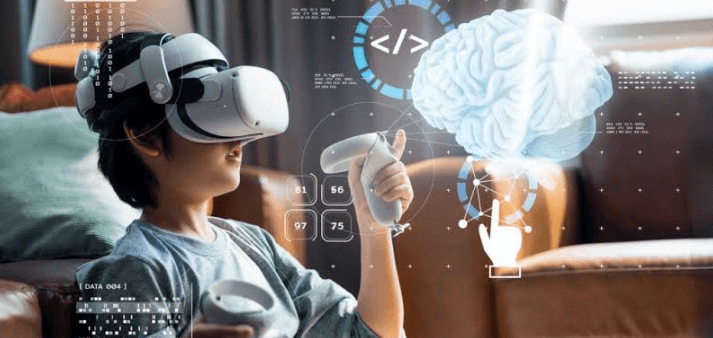
VR delivers immersion by tightly coupling perceptual fidelity, latency, and per-user perspective to sustain perceptual continuity. Accurate vestibular-visual coupling minimizes motion sickness, while stable frame timing reduces conflicts. Presence cues—spatial audio, proprioception, plausible motion—anchor users in a coherent space. Precise rendering pipelines and intuitive interfaces enable autonomous exploration, supported by haptics and cross-modal feedback. The result is scalable, transferable engagement across contexts, inviting further consideration of how each design choice reinforces immersion.
What Makes VR Immersion Possible
VR immersion arises from the synchronized interplay of sensory fidelity, latency minimization, and consistent per-user perspective.
In this framework, motion sickness is mitigated by accurate vestibular-visual coupling and stable frame timing, while presence cues—spatial audio, proprioceptive feedback, and believable motion—anchor users within a coherent virtual environment.
Precision in rendering pipelines ensures perceptual continuity and user autonomy.
Designing Sensory Cues for Believability
Sound design anchors environmental realism; haptic realism conveys contact fidelity. Subtle latency management and cross-modal weighting optimize immersion, minimizing perceptual conflicts. The result is a stable, freely explorative VR experience with credible, actionable feedback.
Interfaces and Interaction That Feel Natural
Haptic mapping informs tactile fidelity, while locomotion strategies minimize motion mismatch. Visual fidelity and audio realism reinforce user embodiment; gesture recognition augments control, delivering seamless, freedom-promoting interfaces without extraneous verbosity.
Real-World Applications That Sustain Immersion
Practitioners implement tailored haptic cues to convey material properties, motion, and impact, while orchestration of social presence enables collaborative tasks and shared scenarios.
This approach supports transferability, scalability, and durable engagement across professional and educational contexts.
Frequently Asked Questions
How Does User Motion Affect VR Sickness Over Longer Sessions?
Motion consistency reduces VR sickness over longer sessions by stabilizing perceived movement; motion smoothing and locomotion comfort combat abrupt shifts, while fatigue management mitigates fatigue symptoms, enabling sustained immersion and user autonomy, aligning with an innovative, freedom-seeking research mindset.
Can VR Induce Long-Term Cognitive or Perceptual Changes?
VR perception potentially reshapes cognition over time, with dynamic data suggesting cautious cognitive adaptation and lasting perceptual recalibration, yet evidence remains gradual. The analysis notes nuanced neuroplasticity, driven by repeated exposure, sensorimotor integration, and adaptive, freedom-loving exploration.
What Are Accessibility Considerations for Diverse Users?
Accessibility considerations include adhering to accessibility guidelines and supporting adaptive input, ensuring compatibility across disabilities. The system employs inclusive UI, adjustable locomotion, and multimodal feedback, enabling diverse users to navigate, customize controls, and retain exploratory freedom within immersive environments.
How Is Social Presence Managed in Multi-User VR?
Social presence emerges through calibrated social cues and latency-aware multi-user networking, enabling participants to perceive others as co-located agents; rigorous synchronization, avatar fidelity, and privacy controls sustain credible interactions across shared virtual spaces.
See also: turfmillan
What Are Ethical Implications of Immersive Advertising?
Ethical implications of immersive advertising involve transparent consent frameworks, guarding user autonomy, and preventing manipulation. Ethical monetization requires verifiable disclosure, opt-in controls, and isolated ad contexts to preserve freedom while enabling monetized, innovative VR experiences.
Conclusion
In the lab, latency thins to silence while motion remains insistently physical; in the field, pixels mimic truth with perfect timing and proprioceptive concord. Temporal fidelity and spatial audio dance, each cue sharpening certainty. Hand-held controllers become faithful extensions, yet gaze and gesture unlock invisible affordances. The illusion persists where data convinces the senses, but truth resists capture—discrepancies reveal. Immersion thrives at the seam where engineering precision meets perceptual plausibility, a bridge between what is and what is believed.
